


AlexandroupolisINGS
The Alexandroupolis Independent Natural Gas System (INGS) is one of the most significant energy infrastructure projects developed in Southeastern Europe, establishing a new energy gateway for the wider region.
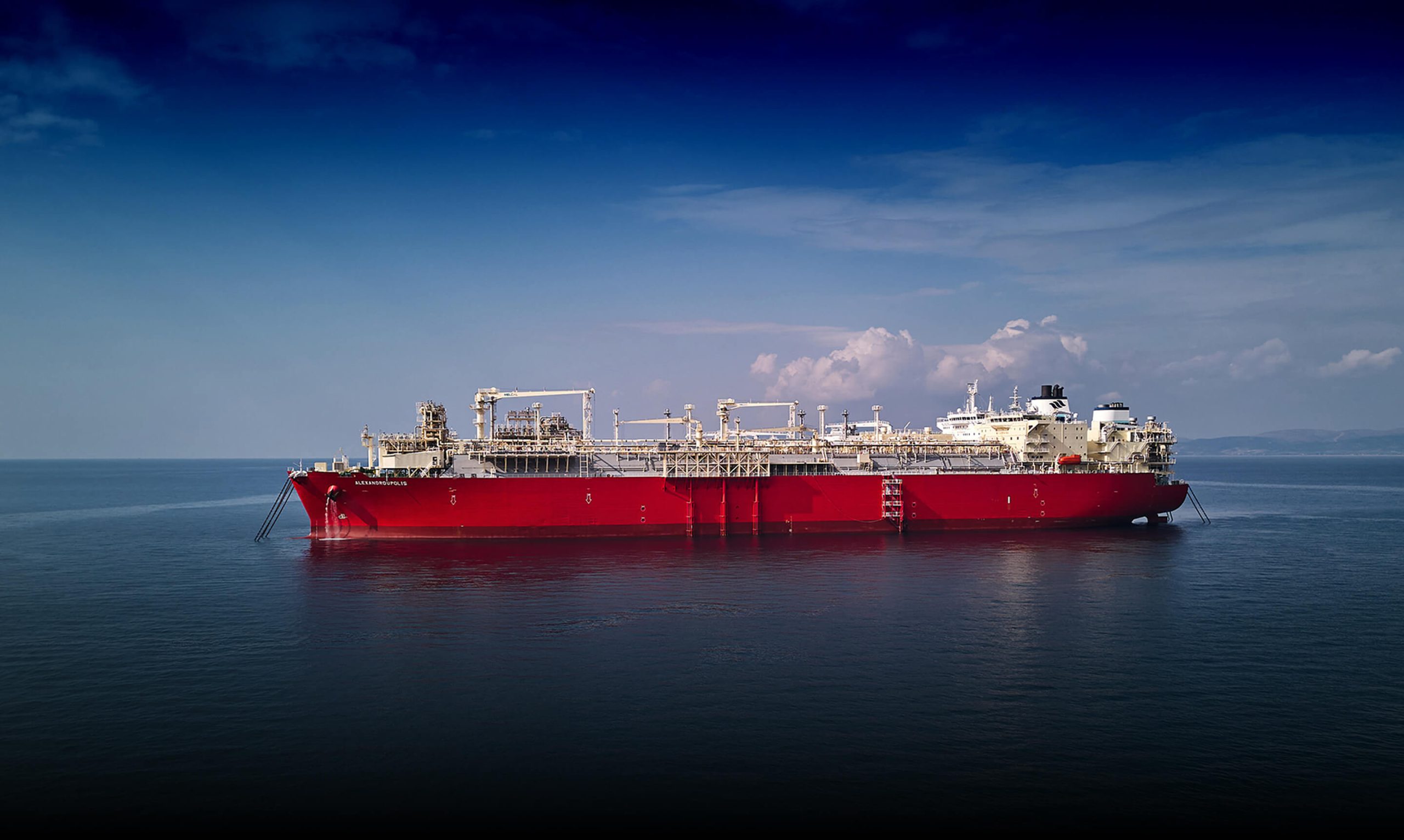
The project consists of a state-of-the-art Floating Storage and Regasification Unit (FSRU), located offshore Alexandroupolis, and a 28 km high-pressure pipeline connecting the unit to the Greek National Natural Gas Transmission System.
Designed to enhance energy security, supply diversification and regional market integration, the terminal enables northbound natural gas flows through the Vertical Gas Corridor to Greece, Bulgaria, Romania, North Macedonia, Serbia, Moldova and Ukraine in the east, Hungary and Slovakia in the west.
The Alexandroupolis INGS plays a critical role in strengthening the resilience and flexibility of the wider European energy system, while supporting the development of new regional energy corridors and reducing dependency on single supply routes.
Recognized as a Project of Common Interest (PCI), the project represents a defining milestone for European energy strategy, strengthening the European Union ‘s energy security framework and advancing the objectives of REPowerEU through the diversification of energy sources and supply routes amid evolving geopolitical challenges. Its implementation has been co-financed by the European Union through relevant operational programmes supporting energy infrastructure, climate resilience and innovation.
As one of Europe’s pioneering FSRU projects, the development of the Alexandroupolis terminal also contributed to shaping the regulatory and operational framework for future floating LNG infrastructure across Europe.
Built to the highest international standards of safety, operational reliability and environmental responsibility, the project reflects Gastrade’s long-term vision for a more interconnected, resilient and secure energy future.
Floating Storage & Regasification Unit (FSRU)
The FSRU unit consists of the following main components:
- Facilities for the berthing of incoming LNG carriers and LNG cargo reception facilities
- Four LNG storage tanks with a total capacity of 153,500 m3
- Three regasification units, each with a regasification capacity of 265 ΜΜscfd, equivalent to 312,700 Sm3/hr.
- Electric generators for the power supply of the FSRU
- A fiscal metering unit for measuring the volume and composition of the regasified natural gas
- Spread Mooring System
- Gas Export Flexible Risers & Umbilical
- Crew accommodation facilities
-
0 m
BREADTH
-
0 m
LENGTH
-
0 m
HEIGHT
Regasification Process
The FSRU is designed to provide uninterrupted regasification services on a 24/7/365 basis.
LNG carriers berth alongside the FSRU and transfer LNG to the units’s storage tanks through cryogenic hoses.
The LNG is then pumped into the regasification units, which constist of:
- Two dual open/closed-loop units
- One open-loop unit
Each regasification unit has a capacity of 265 ΜΜscfd, equivalent to 312,700 Sm3/hr.
The closed-loop units utilize steam boilers to generate the heat required for regasification, while the open-loop units use the thermal energy of seawater supplied through dedicated seawater suction pumps.
Following regasification, the natural gas is routed through the fiscal metering unit for quality and quantity measurement before being transported through flexible risers to the subsea pipeline for onshore transmission.


Subsea and Onshore Pipeline
The pipeline consists of a Pipeline End Manifold (PLEM), a 24km subsea section, and a 4 km onshore section, including a coastal valve station. The pipeline makes landfall in the Apalos area and continues northward, connecting to the Greek National Natural Gas Transmission System (NNGTS) through the new Metering and Regulating Station in Amfitriti.
The Alexandroupolis INGS is also designed to enable future direct interconnection with other pipelines planned for development in the region, such as Trans Adriatic Pipeline (TAP), further strengthening regional energy integration and supply flexibility.
-
30’’
PIPELINE DIAMETER
-
110
barg max pressure
-
28km
TOTAL LENGTH


Thrace INGS
Building on the expertise gained through the development and operation of the Alexandroupolis INGS, Gastrade is advancing the Thrace Independent Natural Gas System (Thrace INGS), a second LNG Terminal in the Thracian Sea.
The project comprises an FSRU together with the permanent offshore and onshore infrastructure required to connect the unit to the National Natural Gas Transmission System and/or the Trans Adriatic Pipeline (TAP).
Planned to be located approximately 8 km east of the Alexandroupolis LNG terminal, the new FSRU will have LNG storage capacity of up to 185,000 m³ and regasification capacity exceeding 6 bcm annually.
Operating in close synergy with the existing Alexandroupolis infrastructure, the Thrace INGS will create significant operational efficiencies, increase supply flexibility and further support the growing energy needs of Southeastern and Central Europe, while further strengthening Greece’s strategic role as a regional energy hub.
Vertical Gas Corridor Initiative
The Alexandroupolis and the Thrace INGS form a key component of the Vertical Gas Corridor, strengthening energy resilience, supporting sustainable development and enhancing Southeastern and Central Europe’s access to the evolving global LNG supply landscape.